FRIDAY FYI | Your Weekend Assignment #001
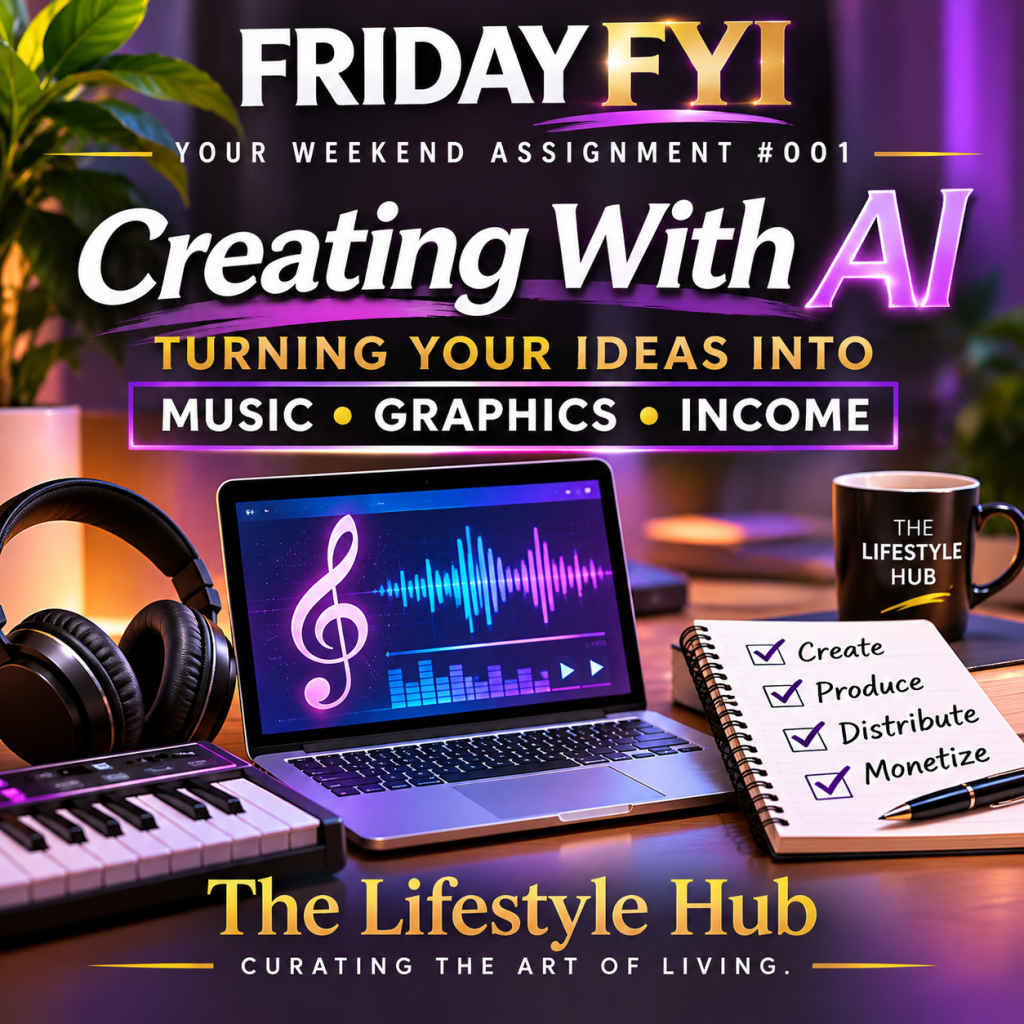
Before you hit the streets, know this.
Artificial intelligence is becoming part of everyday creativity. Whether you are an author, musician, small-business owner, student, or someone with an idea you have been putting off, there are tools that can help you research, write, design, organize, and experiment.
This week, we are looking at the bigger picture: what AI tools do, how they can work together, and how to turn a creative idea into a real project. You do not have to be a technology expert to start.
One Idea, Several Creative Tools
Think about creating a new book, launching a podcast, promoting a business, or developing a song. You might use one AI tool to brainstorm, another to research, and another to create music or visuals. Your role is to choose the direction, check the results, edit, and decide what is worth sharing.
AI Tools Worth Exploring
These platforms have different strengths. Explore the ones that match your goals rather than signing up for everything at once.
ChatGPT — Brainstorm article and book ideas, develop captions and marketing plans, organize projects, and create or refine graphics. Always review generated information and images before publishing.
Suno — Experiment with songs, instrumentals, and vocals. For songwriters, it can help explore how original lyrics might sound in different musical styles. Check the commercial-use terms for the plan used to create a track.
Perplexity — Ask research questions and explore linked sources. It can be useful when comparing ideas or looking for background information, but original sources should still be checked.
Canva — Create social graphics, presentations, flyers, and book promotions with design templates and AI-assisted features.
Adobe Firefly — Explore AI-assisted image generation and editing for visual projects.
What Can You Actually Make?
An author can research an audience, organize a book launch, and develop promotional images. A songwriter can draft original lyrics, explore musical arrangements, and plan a release. A small-business owner can create product descriptions, flyers, and social campaigns. A creator can turn one topic into a blog post, an Instagram carousel, and a short video script.
These are starting points, not instant businesses. Good results still require editing, fact-checking, audience research, and consistent effort.
What I Actually Did Before Releasing My AI Music
For me, AI creation became a real learning experience. I wrote original lyrics, used Suno to develop music for my AI artists, and used ChatGPT to help research the business side before releasing through UnitedMasters. I didn’t want to assume that generating a song automatically meant I could distribute or monetize it.
First, I created with my own lyrics. I brought my original writing into the process and explored how Suno could turn those words into recordings.
Next, I checked my subscriptions and read the agreements. I reviewed Suno’s paid-plan commercial-use provisions and OpenAI’s terms, using ChatGPT to help break down the language. I checked what rights were granted, what restrictions applied, and what I needed to verify myself.
Then I prepared my release through UnitedMasters. During that process, I was asked to upload screenshots showing my Suno and ChatGPT subscriptions. I provided the requested documentation. That taught me to keep subscription records, creation dates, original drafts, and copies of the terms that applied to my work.
Finally, I made sure I understood the difference between creative possibilities and publishing permissions. My original human-written lyrics are different from AI-generated musical elements, and permission to distribute a recording is not the same as a guarantee of copyright protection or royalties.
Read the Terms of Service Before You Click Agree
We’ve all clicked “I agree” without reading every word. But if you’re building a creative business, the terms matter. Check whether your plan allows commercial use, when the rights apply, how downloads work, whether you can distribute the output, and what third-party platforms require. Use AI to help explain unfamiliar language, but always check the actual agreement rather than relying on a summary alone.
My lesson: Don’t wait until you’re ready to publish to find out what you agreed to. Creating is the exciting part; understanding your tools is how you prepare to use them responsibly.
Can AI Help You Earn Income?
Potential opportunities include publishing original books, promoting products, offering creative services, distributing eligible music, developing educational resources, and building content for an existing business. But using AI does not guarantee ownership of every generated element, acceptance by a platform, or earnings. Different services have different licensing and monetization rules.
Beyond the Upload: Where Music Income Can Come From
One more thing I learned while releasing my AI artists: getting a song onto streaming services is only one piece of the music business. Distributors such as UnitedMasters and DistroKid can deliver eligible recordings to digital platforms and handle certain recording revenue. Depending on the rights you control and the services you enroll in, other income streams may need separate attention.
Performance royalties: Organizations such as BMI and ASCAP collect qualifying public-performance royalties for musical compositions. If you have original, protectable songwriting contributions, research how to register your works with your chosen organization.
Digital mechanical royalties: The Mechanical Licensing Collective (The MLC) administers certain U.S. digital mechanical royalties for eligible compositions. If you are self-administered, you may need to register directly; if you use a publishing administrator, check whether it already collects these royalties for you.
Other mechanical licensing: The Harry Fox Agency provides mechanical licensing and administration services for participating publishers and rightsholders. It does not replace The MLC for U.S. blanket-license digital streaming royalties, and not every creator needs both services.
Licensing your music for someone else’s project: Films, advertisements, and other productions may require permission to use a composition and its recording. If you control the necessary rights, you may be able to negotiate a license. Permission is not automatic, and AI platform terms or third-party rights may limit what you can authorize.
Not every AI-generated track qualifies for every kind of royalty. In particular, commercial permission to distribute a Suno recording is not the same as copyright protection for all of its musical elements. For me, understanding the difference is part of doing the homework before releasing anything.
Friday FYI takeaway: Don’t stop learning at the upload button. If music is part of your creative business, find out what your distributor handles, what publishing income may be available, and how permissions work before you let others use your work.
A Quick Word About Rights and Responsibility
Before you publish or sell, read the terms for the tool you used. Suno’s qualifying paid plans grant commercial-use rights for eligible songs, subject to its terms. OpenAI’s terms generally provide users rights in their outputs as between the user and OpenAI, to the extent permitted by law; a paid ChatGPT plan is not required for that general provision. Copyright protection for AI-assisted work depends on qualifying human authorship, and third-party rights still apply. Keep drafts and records, and avoid using someone else’s protected work without permission.
Your Weekend Assignment #001
1. Pick one creative goal: a song, book, graphic, blog post, or business promotion.
2. Explore two AI tools that might help.
3. Make a simple sample or project outline.
4. Check the results for accuracy, quality, and originality.
5. Read the tools’ usage and commercial terms before sharing or selling anything.
Bonus: Keep your prompts, drafts, edits, and research links together so you can build on the work next week.
Your Weekend Reading
Suno Terms · OpenAI Terms of Use · U.S. Copyright Office AI Resources
Monday’s Takeaway
By Monday, aim to have one clear idea, a useful tool to help you pursue it, and a first draft or plan. You do not need to master every platform this weekend. Start small, stay curious, and learn how to use technology with intention.
Friday is for learning. Monday is for applying.
The Lifestyle Hub — Curating the Art of Living.
Educational information only; not legal or financial advice. Platform features and terms may change.




Leave a Reply